Strategies of an antidemocratic movement


Desinformation, hatespeech and conspiracy theories on social media
As an organization for media education, medialepfade.org develops innovative concepts to explore new digital pathways for learning and participation.
mediale pfade e.V.
- Jugend hackt 2go (Coding and making for MINTA*)
- DataSkop (Aunderstanding algorythm)
- ULAT (Unlearning Anti-feminism on TikTok)
- Medienkompetenzzentum
Projects

Educational approach: media ecudaciton, political education, primary and universal prevention
Field: Antisemitism, the far right, islamism, antifeminism
Pillars of our work: Workshops for youth and young adults, train the trainers
Project AntiAnti
@wirsindantianti

Primary prevention
- Work with a broad target group
- use of different educational approaches (medialitercy, politcal education, historical education)
- Our goal: critical reflection reflection of media usage and own attitude patterns
- nor suitable for radicalized groups or individuals
Prevention of radicalisation
Prevention of radicalization

Technological perspective:
How does it work?
Socio-cultural perspective:
What are the effects?
Usage oriented perspective:
How do I use it?
-
Easy access to unverified content
-
Simple explanations for complex issues
(keyword: conspiracy narratives) -
Fake news, hate speech, algorithms
-
Professionalization of ideological actors
-
BUT: no online radicalization without offline psychosocial foundations
Media education, information literacy, and critical thinking are essential for prevention.
Online radicalization
There are no separate “online versions” of group-focused enmity.However, the digital space offers:
-
easy access
-
new formats
-
wide reach
-
less opposition
-
anonymity
-
often a lack of consequences
-
online radicalization frequently leads to offline actions
Online vs. offline?
TikTok
-
Approximately 21 million TikTok users in Germany
-
Around 50% of all 14–19-year-olds have a TikTok account (average use: 90 minutes per day)
-
A key source of information and a search engine for young people
-
Moderation gaps on TikTok
-
Content tends to be more provocative or sensational because emotional reactions generate more engagement than factual communication
-
Engagement logic
-
Algorithmic recommendation system
Engagement logics

What is desinformation?
-
False, deliberately generated information
-
Intention: Causing harm to individuals, social groups, organizations, or countries
-
Challenge: The flood of information makes it difficult to distinguish reliable from unreliable sources
-
Strategy: Deliberately exploiting this overload
Quelle: https://wirsindantianti.org/glossar/desinformation/
How does desinformation work?
Quelle: https://wirsindantianti.org/glossar/desinformation/
-
Deliberately fueling doubts about established sources of information
-
Effect even without fully believing the false claim
-
Erosion of trust in all information sources
-
Consequence: Accelerating societal division
Desinformation

wrong information
intent to cause harm
Hatespeech
Hate speech is when words or images are used intentionally to hurt people and/or make them afraid. This can happen through incitement, devaluing statements, or calls for violence. Hate speech often targets specific people or groups who already experience discrimination, such as LGBTQI* people, Muslims, Jewish people, refugees, or People of Color. It typically relies on racist, antisemitic, or sexist language. Hate speech reproduces and reinforces existing social power structures.
The public discussion and awareness around hate speech varies significantly between countries. In Germany, hate speech can lead to criminal prosecution depending on how it is expressed. The Network Enforcement Act (NetzDG), in effect since 2017, is a legal attempt to track and prevent hate speech online.
Quelle: https://wirsindantianti.org/glossar/hate-speech-hassrede/
Hatespeech
-
Around half of all internet users report encountering hate speech
-
Not all users are affected in the same way
-
Hate posts and orchestrated shitstorms push people off online platforms and lead to a decline in democratic discourse
-
The phenomenon is increasing
Quelle: Studie "Lauter Hass - leiser Rückzug" - HateAid
Hatespeech
The devaluation can target characteristics such as skin color, origin, sexuality, religion, gender, age, or disability.
Group-based misanthropy includes:
Racism, antisemitism, anti-Muslim hostility, homo- and transphobia, sexism.
Social media strategies
Social media
The popularity of social media among young people is constantly shifting, and ideological actors adapt to these trends.
Relevant platforms:
-
Instagram, TikTok
-
Video streaming (YouTube, Bitchute, Twitch)
-
Messaging apps (Telegram, WhatsApp)
-
Gaming platforms (Discord, Steam)
-
Microblogging services (X)
-
Forums and imageboards (reddit, 4chan)
Social media
Far-right actors convey their content strategically:
-
Lifestyle formats (music, clothing, gaming, sports, environmentalism, esotericism)
-
Ideas about action and society are woven in subtly
-
Strategic use of trends, challenges, memes, emojis, and hashtags
Why TikTok?
TikTok is used to expand their sphere of influence
(especially to reach young people)
-
Awareness of the platform’s moderation rules (shadowbans, secondary/third accounts)
-
Highly diverse strategies, no single unified approach (reposts, mass content, “vibes”)
-
TikTok is less actor-centered – viral spread depends more on individual videos and trends
Identifying feature: “Fashwave aesthetic” and “Tradwave aesthetic”
-
Pop-cultural references
-
Glorification of a “traditional” lifestyle
-
Political messaging subtly woven in
-
Sound as the central strategy for spreading the content
New right wing aestetics

The importance of sound
-
Sounds function on TikTok as part of the video, as memes, and as hashtags
-
Specific communities use the same sounds
-
New target groups are reached by using specific sounds
Desinformation and crisis

Quelle: Screenshot TikTok; Video YouTube https://www.youtube.com/
watch?t=142&v=F_3L0z1lgAE&feature=youtu.be

Decontextualization and
emotionaliszation
Decontextualization and
emotionaliszation

Decontextualization and
emotionaliszation

Conspiracy ideology on TikTok


Example:"New World Order"
Updated anti-semitic narratives
Conspiracy ideologies

Conspiracy ideologies


Conspiracy ideologies

Conspiracy ideologies
"The great replacement"
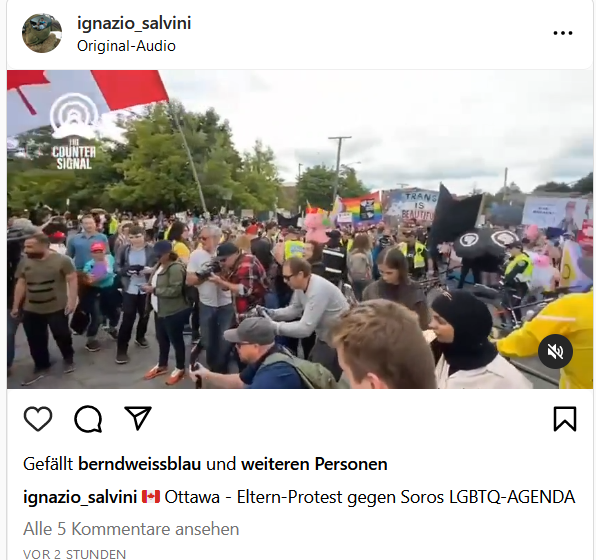
"cipher'Soros' and LGBTQI* hate"
Conspiracy ideologies
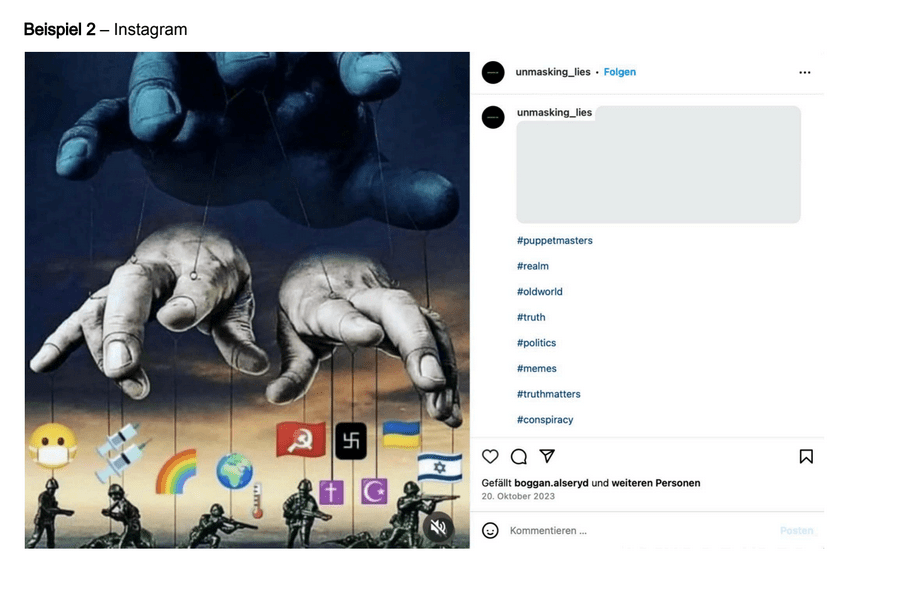
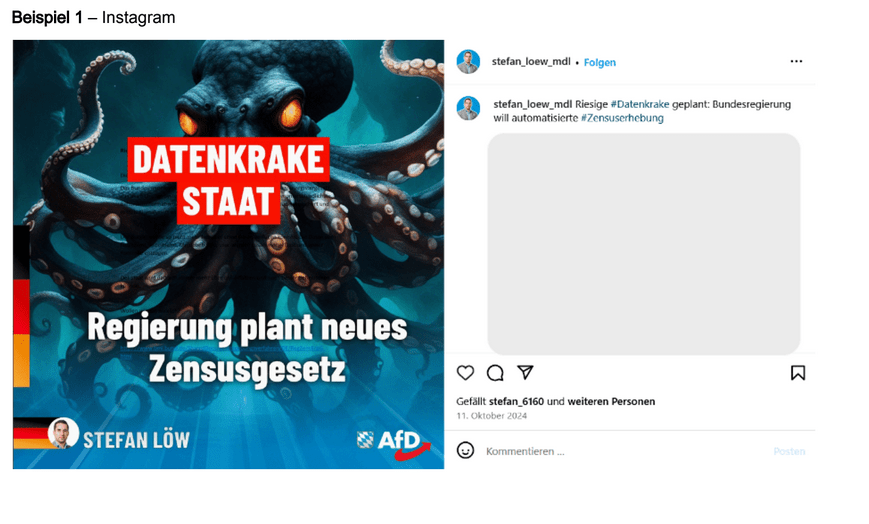
Anti-Semitic narratives on current events
Approaches of the far right
The New Right places a strong emphasis on online activism. Disinformation and hatespeech is packaged into a variety of formats to spread it effectively.
Beispiel "Gegenuni"
Geschichtsrevisionismus
Pseudo-journalism

-
Successful formats are copied (e.g., street interviews)
-
“Authentic footage” (demonstrations or similar events)
-
Hosted journalism
-
Normalization of far-right ideologies
-
Appearance, speech, and filming locations not associated with far-right ideology

Bsp. "Ketzer der Neuzeit"
Bsp. "Neverforgetniki"
Pseudo-journalism


Bsp: "Aktivist Mann"
Bsp: "Weichreite TV"
Bsp: "Aktivist Mann"
Ai & Deepfakes


AI accounts

Documentaries

Spread of disinformation and conspiracy ideologies through supposedly credible documentary-style formats
Examples of hatespeech
Right wing music
-
Music remains an important recruitment tool for the extreme right
-
Normalization of far-right ideologies (e.g., the “Sylt song”)
-
Hate speech framed as a party experienc

Antifeminism
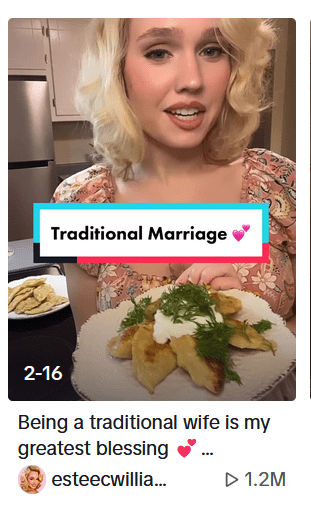

Codes, memes, emojis & hashtags - How hatespeech is hidden

Internet phenomenon and an involuntary symbol of the U.S. “alt-right” movement, popular among Trump supporters
- Coded as frog emoji: 🐸 🐸
Kiwi-Emoji
🥝🥝🥝
-
Symbol of anti-trans hostility: “There are only two genders”
-
Background: Reaction to the cancellation of a lecture at Humboldt University by Marie Luise Vollbrecht. Her example: with kiwis, exactly two biological sexes can be identified.
Combination of different emojis


Quelle: https://www.belltower.news/hass-emojis-welche-emojis-sind-bei-nazis-rechtsradikalen-rassistinnen-beliebt-113061/
"Hitlergruß":

Anti-semitic emojis & hashtags
#rothschildconspiracy
#zionazis
Quelle: https://www.belltower.news/hass-emojis-welche-emojis-sind-bei-nazis-rechtsradikalen-rassistinnen-beliebt-113061/
🧛🧛
😈😈
🤑🤑

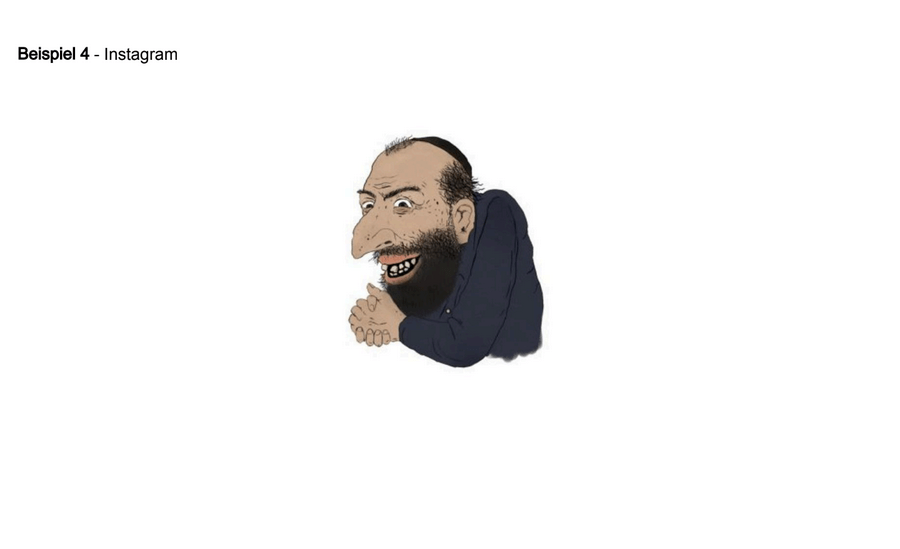
Specific online strategies
-
“Ironic” communication through memes (e.g., Pepe)
-
Use of specific emojis as dog whistles
-
Doxxing (publishing private information about political opponents)
-
Hate speech and threats
-
Orchestrated shitstorms
-
“Chain messages” or videos with fake news on social media
-
Own vocabulary, number codes (18, 28, 88, 1488)
-
“Gamification” of right-wing terrorism (livestreaming)
-
“Hijacking” hashtags and trends
Specific online strategies
-
Derailing (intentionally derailing online discussions)
-
Dogwhistling (e.g., “white boy summer”)
-
Occupying hashtags and using indirect communication
-
Participation strategies and calls to action (e.g., “repost”)
-
Tagging each other (to generate traffic)
-
Engagement logic (content designed to trigger strong emotions)
-
Para-social relationships (faces instead of projects)
-
Cross-media presence
-
Economic interests (promotion of merchandise/distribution)
Political education
-
critical thinking in the political sphere
-
tolerance for ambiguity
-
empowerment
Educational processes for prevention
Media education
-
media literacy
-
digital literacy
-
information literacy
- Understanding and relating
-
“The Kids Are Alright”
engaging with young people’s lived realities and experiences
Further links to the topic of online-radicalization
Follow us on instagram!

